Travel-Maine.Info
|
Main Menu
Home
Blog
FALL
Fall Foliage
Apple Orchards
Halloween
Hunting
Thanksgiving
WINTER
Alpine Skiing
Nordic Skiing
Snowmobiling
Ice Fishing
Dogsledding
Snowshoeing
SPRING
Maple Syrup
SUMMER
Biking
Birding
Seacoast
Whitewater Rafting
Kayaking
Camping
Hiking
Fishing
Summer Camps
Windjammers
THINGS TO DO
Vacation Planner
Shopping
Places to Visit
Recreation
Forts
Lighthouses
Museums
HELPFUL PAGES
Cities & Towns
Maine Blogs
Maps
Maine News Media
Books about Maine
Business Directory
Business Services
Real Estate
Fort Baldwin
Phippsburg, Maine
Home >Places to Visit > Historic Forts > Fort Baldwin
Fort Baldwin is located at the mouth of the Kennebec River in Phippsburg, Maine. The fort was named after Jeduthan Baldwin - an engineer for the Colonial army during the Revolutionary War. It occupies 38 acres of land.
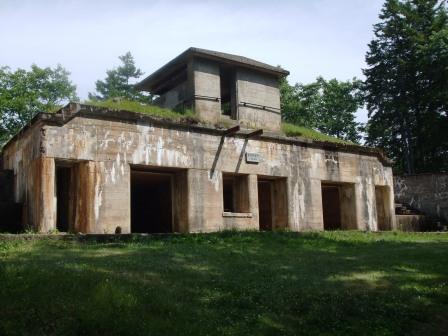
Battery Cogan - Fort Baldwin
Construction. The fort saw its construction start in 1905 and it ended in 1912. The fort replaced the Civil War-era
Fort Popham which was also in Phippsburg across the water at the mouth of the Kennebec River.
The fort was constructed in the manner that many coastal defense land batteries were built. The fort was not constructed of granite like
many other coastal defense forts; it is made of mostly concrete. The fort originally had three batteries. The batteries were removed in
July 1924. (1).
World War I. The fort was garrisoned prior to and during World War I. "During World War I, Fort Baldwin and Fort Popham held a garrison of 200 soldiers including the 13th and 29th Coast Artillery". (2). The military forces assigned to the fort did not live at the fort; they lived in housing near Atkins Bay.
World War II. The fort was reactivated in World War II and garrisoned by D Battery, 8th Coast Artillery. A concrete observation tower was built. Observes in the tower would radio the position of enemy vessels to batteries located throughout Casco Bay. (3).
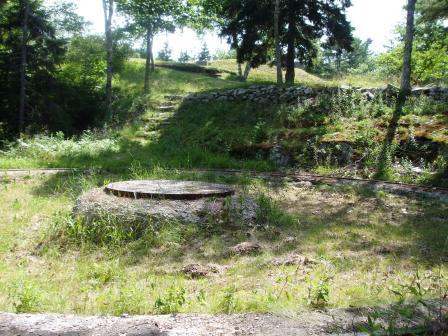
Gun positions at Fort Baldwin
Directions and Maps to Fort Baldwin.
The fort is located about 15 miles south of Bath on Maine Route 209.
Other Web Sites with Information about Fort Baldwin
Fort Baldwin. By Wikipedia, the free encyclopedia. Some of the info from this page came from this Wikipedia web page. This webpage has additional descriptive information on the type and number of cannons, who the batteries were named after, and the history of the units that garrisoned Fort Baldwin during World War I.
Maine Tourism : Fort Baldwin. By ALLAcadia.com.
News Articles, Documents, and Publications
about Fort Baldwin in Phippsburg, Maine
September 25, 2000. "The Forts of Maine". By Frederick W. Chesson.
Footnotes:
1. Info taken from Maine Tourism : Fort Baldwin of the Acadia National Park website.
2. Info taken from Fort Baldwin. By Wikipedia, the free encyclopedia.
3. Ibid.
|
|
AdsThe website is an Amazon Associate and earns money for qualifying purchases.
|
|
|
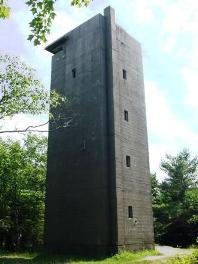 Observation tower at