Travel-Maine.Info
|
Main Menu
Home
Blog
FALL
Fall Foliage
Apple Orchards
Halloween
Hunting
Thanksgiving
WINTER
Alpine Skiing
Nordic Skiing
Snowmobiling
Ice Fishing
Dogsledding
Snowshoeing
SPRING
Maple Syrup
SUMMER
Biking
Birding
Seacoast
Whitewater Rafting
Kayaking
Camping
Hiking
Fishing
Summer Camps
Windjammers
THINGS TO DO
Vacation Planner
Shopping
Places to Visit
Recreation
Forts
Lighthouses
Museums
HELPFUL PAGES
Cities & Towns
Maine Blogs
Maps
Maine News Media
Books about Maine
Business Directory
Business Services
Real Estate
Historic Forts of Maine
Home > Places to Visit > Historic Forts
The state of Maine has a series of historical forts dating back to the colonial days and constructed during various conflicts that took place between the French, English, and Indians. Some were built prior to and during the civil war and later as coastal defenses during WWI and WWII.
Fort Allen
Eastern Promenade, Portland, Maine
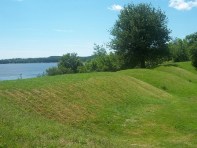
See the remains of an 1814 era fort. Tiers of earthworks are visible. A
sketch of Fort Allen from 1845 is provided by the Maine Memory Network, a
map showing the general location of Fort Allen Park (infosports.com), and click here for a
photo of Fort Allen Park.
Fort Baldwin
Phippsburg, Maine
Fort Baldwin was built just prior to World War I. It was built to replace Fort Popham
which was nearby. The fort saw service during World War I and World War II.
Fort Edgecomb
David Island,Edgecomb, Maine
This fort was built in 1808-1809 to protect Wiscasset, Maine - an important shipping center at the time. It was garrisoned
during the War of 1812 and the Civil War. It is located on Davis Island. The fort is a two-story wooden blockhouse. It is partially maintained by the
Friends of Fort Edgecomb. More info on Fort
Edgecomb can be found at the Maine Historic Sits website. A photo and description is provided by
Fort Tours and
Portland Public Schools.
Fort Fairfield
Fort Fairfield, Maine.
This
wooden block house played a role in the border dispute that took place in
the late 1830's - referred to as the Aroostook War (a bloodless conflict
about lumber). The New Brunswick, Canada border is one mile away. The
original structure was dismantled and replaced with a rebuilt structure
on/about 1970s. The Frontier Heritage Historical Society maintains the block
house. 2.
Fort Foster
Gerrish Island, Kittery, Maine
The Town of Kittery, Maine website for
Fort Foster Park. SeacoastHN.com has a webpage that describes a
Fort Foster scenic walk with lots of photos. The Maine Geological
Survey of Maine.gov has provided a "Virtual Tour" (slideshow) of
ancient fault rocks at Fort Foster. View an
aerial photo and map of Fort Foster by GoogleEarthHacks.com. Other descriptions are provided by
American Forts,
Fort Tours, and
NETrailhead.
Fort George
Castine, Maine
Castine was the focus of many years of dispute among
the English, French, Indians, and colonialists. For a description of the military significance of Castine, Maine see
History of Castine, Maine by NewEnglandTravelPlanner.com and
Castine, Maine and the
Penobscot Expedition by Wikipedia. Other descriptions are provided
by the Portland Public Schools -
Fort George and A Short
History of Castine by castine.org, . View a
photo (on a postcard) of Fort Castine, Maine.
Fort Gorges
Hog Island Ledge, Portland, Maine
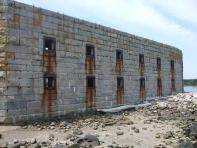
Era 1858, built of granite just prior to the Civil War.
The fort was built to cover the northeastern approaches to the harbor. See the Wikipedia entry for Fort
Gorges, photo and description by Fort Tours,
facts about Fort Gorges (Southern Maine Community College),
photos and description by Portland Public Schools,
photo by GoogleEarthHacks.com, and
A History of Fort Gorges (aroundmaine.com).
Fort Halifax
On the Kennebec River,
Winslow, Maine
This 1754 era fort (blockhouse) located on the Kennebec River was
built for protection of colonial settlements against Indian raids. See the Wikipedia entry for
Fort Halifax,
Maine Bureau of Parks and Lands,
Portland Public Schools, and by
Fort Tours. It is listed in the
National Historic Landmarks Program. There is also an entry with photos and maps to be found on the Waymarking.com website.
Fort Kent
Fort Kent, Maine
See the entry by the Upper St. John's community page
for a history of Fort Kent. Photos and description of the Fort
Kent historic site is provided by the Acadian Culture in Maine web page, Fort Tours,
Portland Public Schools, and by the
Maine Department of Conservation.
Fort Knox
Penobscot River,Prospect, Maine
This Civil War era fort is located about 100 miles
northeast of Portland along the Penobscot River near Bucksport, Maine. Built in the years between 1844 and 1864 it is made of granite and very extensive with good earthworks to defend against a
land attack. It is Maine's largest historic fort. See the Wikipedia entry for
Fort Knox. Other sources of info for the Maine Division of Parks & Public Lands Fort Knox
page, Fort Tours, and
Friends of Fort Knox. A painting of Fort Knox, Maine was done in the 1870s. See a recent
blog posting of Fort Knox providing photos and description. View a
Google map of the Fort Knox location. See also the entry for
Fort Knox by the Maine Historic Sites website. The Maine Division
of Parks Public Lands has a "Fort Knox Research Room" (access
here) with books, periodicals, photos, and photos of Fort Knox.
Fort Levett
Cushing Island, Maine
Near Portland, sits on about 140 acres on the southern side
of Cushing Island in Casco Bay. In the 1890s the Army established Fort
Levett. This fort was last used during WWII for coastal defense.
See
Cushing Island, Maine by Wikipedia.com. A news article published
in July 2006 provides some info on
Cushing Island. The Portland, ME public works department has an
online map of Cushing Island (Acrobat Reader file).
Fort Loyal.
This fort was built in 1678 in the center of Portland at the foot of India
Street. It " . . . served as town hall, jail, and refuge of last
resort. It was pressed into the latter role in May 1690, when four
hundred to five hundred French and Indian troops attacked the settlement".
(1) The fort was
demolished in 1716.
Fort Lyon
Cow Island, Portland, Maine
The military built Fort Lyon in 1896, provided it with two gun
batteries, to defend the harbor from enemy attack. The
Maine Coast Heritage Trust now holds a conservation easement for
Cow Island.
The island is used by
Rippleffect for youth and adult adventure and learning programs.
The west side of the island allows public access. The island is part
of the
Town of Long Island, Maine.
Fort McClary
Kittery, Maine
This fort was built to protect the approaches to the
Piscataqua River. The fort dates from the late 1700s. The fort
was named for a Revolutionary War soldier from New Hampshire who died at the
Battle of Bunker Hill. The fort was garrisoned during five wars - the
Revolutionary War, War of 1812, Civil War, Spanish-American War, and World
War I. Vice President Hannibal Hamlin, who was Vice President during
the Civil War, served for a brief period of time at Fort McClary with a unit
of the Maine Coast Guard. See the
Wikipedia entry for
Fort
McClary. See geocities.com for a
history of Fort McClary,
Fort Tours,
Portland Public Schools, and also
Friends of Fort McClary.
Fort McKinley
Great Diamond Island, Portland, Maine
This fort was built at the turn of the century (1901) and
served as coastal headquarters for the dense of Portland Harbor until the
end of World War II. See
history of Great Diamond Island (Great Diamond Rentals),
facts of the island (Wikipedia), and
Diamond
Cove History.
Fort O'Brien
Machiasport, Maine
This fort was built in 1775. It was destroyed by the
British twice. It was an active fort during the Revolutionary War, the
War of 1812, and the Civil War.
Fort Popham
Phippsburg, Maine
A granite fort with battery built in the 1860s to
protect the Bath, Maine shipyards and approaches to the Kennebec River.
It is located at the mouth of the Kennebec River in Phippsburg. It was
in use during the Spanish American War and World War I. The
fort is now open to the public as a park.
Fort Pownal
Stockton Springs, Maine
The fort was built on the shore of the Penobscot River
shortly after 1758. It was captured by the British in 1775 and burned
down. Also known as Fort Point - see
Fort
Tours for a photo and description. See a
photo of
Fort Pownal by WikiMapia.com.
Fort Preble
South Portland, Maine
Located on the South Portland
waterfront, the
Portland
Harbor Museum lies within the granite walls of Fort Preble. The
fort is now home to Southern Maine Community College.
Fort Richmond
Richmond, Maine. Visit our
webpage on
Fort Richmond, Maine.
Fort St Georges
Phippsburg, Maine
Located on the Kennebec River at
Sabino Head - the
fort was the site of an early English settlement called the Popham Colony or
Sagadahoc Colony established in 1607.
Read more in
"Maine's Popham Colony" by the Athena Review,
Popham
Colony by Wikipedia,
"The
draught of St. Georges Fort, 1610" by Maine Memory Network and
Popham Colony by archaeologychannel.org. Much of this historical
location is now Popham Beach State Park.
Fort St Georges
St George, Maine
Built in 1809 on the St George River to protect the growing
commerce at Warren and Thomaston. British raiders captured the fort in
June 1814 for a short time.
Fort Scammel
House Island, Portland, Maine
This fort is located on
House Island (Wikipedia), a private island in Portland Harbor in Casco
Bay. The island is 24 acres big. The fort, built in 1808, is located on the west side of the
island. It was designed for harbor defense. It is a
three-bastion granite fort. The two story fort has walls, parapets,
munitions bunkers, and a parade ground. The fort was bought by private
owners in 1954 to prevent it from being dismantled. It would seem the
only access to the island is through a firm called
House Island
Lobster Bakes & Tours. The firms website provides
photos of Fort Scammel. A
painting of Fort Scammel was done in 1872. See some
photos of Fort Scammel. Here is a
photo of Fort Scammel ca. 1900 (Maine Historical Society).
Fort Sullivan
Eastport, Maine
Read some history about Eastport -
including some about Fort Sullivan offered by the
Border Historical Society, the
Maine Development Foundation, and view
maps of
Eastport.
Old Fort Western
Augusta, Maine
Built in 1754 this fort is the oldest surviving wooden fort
in New England. This fort was used by Benedict Arnold as a staging
point for his attack on Quebec during the American revolution. See photos and description by
Portland Public Schools and
Fort Tours.
Fort William Henry
Bristol, Maine
See the photo and description by
Fort Tours. The Maine Department of Conservation also has a web
page on the
Colonial Pemaquid Historic Site (Fort William Henry). See also the
Friends
of Colonial Pemaquid for more info and photos about Fort William Henry.
Wikipedia also has a small entry on
Fort William Henry. Read the article below dated August 2010 about
the history of Fort William Henry. .
Fort Williams
Cape Elizabeth, Maine
This is located on the same site as the Portland Head
Light. It was established in 1898 for coastal defense and was garrisoned up
until the end of World War II. The fort was equipped with 12" Rodman's
on disappearing carriages. See the following web sites for more
info on
history of Fort Williams (Fort Williams Charitable Foundation),
Fort
Williams entry for the Historical Marker Database, the
Fort
Williams Centennial Celebration (Cape Elizabeth) held in 1999, and
Fort
Williams Park. See also
"Unearthing Fort Williams' past", by Ann S. Kim, Maine History
News, April 10, 2010.
Steele and Cravens Batteries
Peaks Island, Portland, Maine
Two Lights State Park
Cape Elizabeth, Maine
Internet Resources about Historic Forts in Maine
Forts in Maine. Wikipedia, the free encyclopedia.
Coast Defense Forts of Maine. Geocities.com.
Historic Houses and Forts in Maine. MaineToday.com.
Maine Historical Forts. A school project of Portland Public Schools.
|
|
AdsThe website is an Amazon Associate and earns money for qualifying purchases.
|
|
|